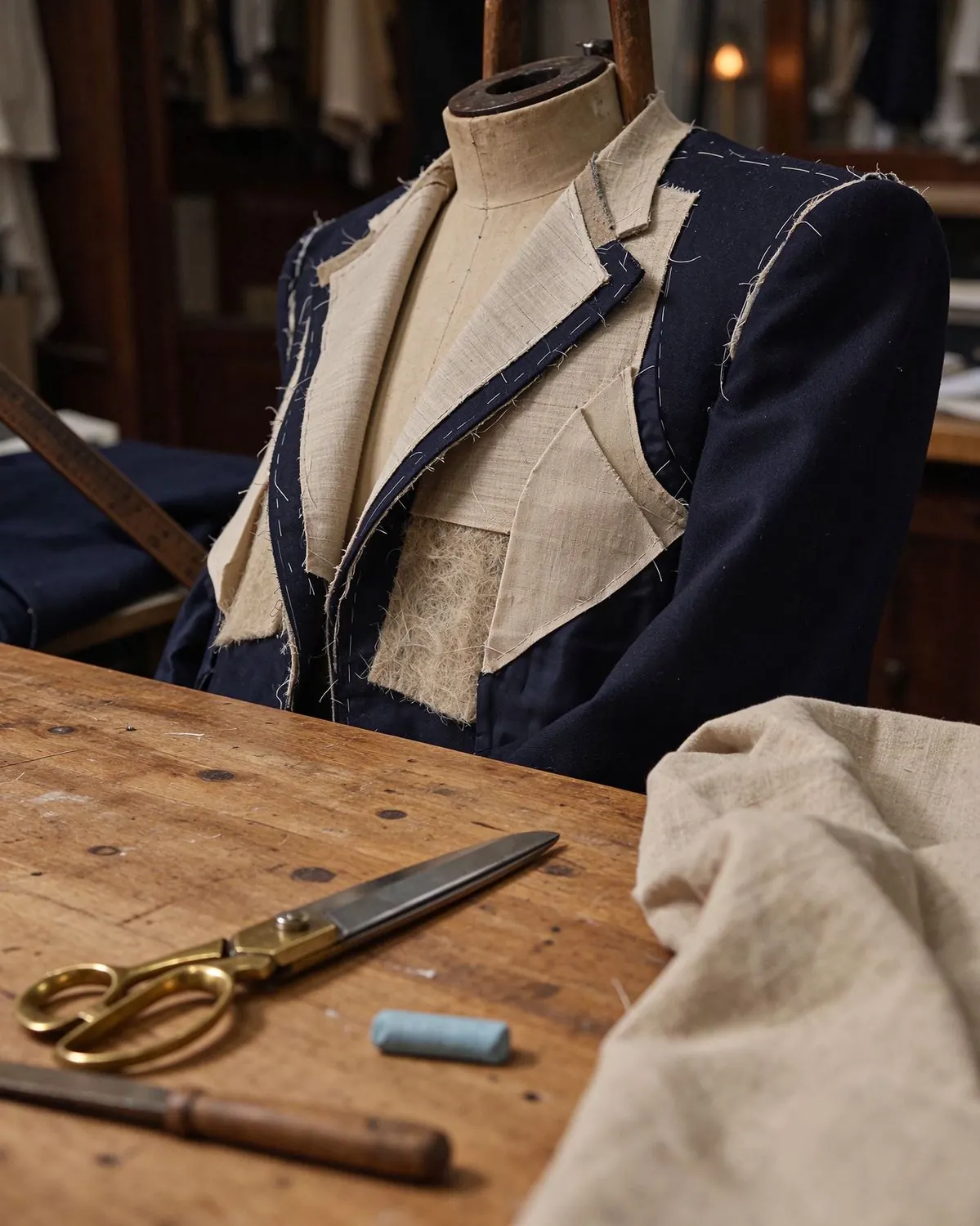
Corduroy is cut by nap direction, and that is the whole craft. Cut one panel the wrong way and the jacket changes shade at the seam under any raking light. The rest is weight and pressing, and pressing is where cheap cord goes flat.
Detail that decides the jacket
- Wale — 8–11 wale for a jacket; 14 wale is trouser weight and reads thin on a lapel.
- Weight — 320–360 g/m2. Below 300 the nap crushes at the elbow within a season.
- Nap direction — all panels cut with the nap running down. Reversed panels are visible in every photograph.
- Pressing — steam only, needle board. A flat press leaves a permanent sheen on the lapel.
| Colour | Weight | Wale | Market |
|---|---|---|---|
| Tan / camel | 340 g/m2 | 8 | UK, IT, JP |
| Chocolate | 340 g/m2 | 11 | DE, NL, US |
| Olive | 320 g/m2 | 11 | AU, FR |
Quoting
100 pieces, 7-day sample, 25–35 days bulk. 2.1–2.4 m per blazer at 150 cm; add 0.2 m for pattern matching on the lapel and pocket flaps.
- Does corduroy fade at the seams?
- Only when the nap is reversed. We cut every panel in one direction and check the lapel under raking light before pressing.
- Can it be washed?
- Dry clean. A machine wash flattens the nap and cannot be recovered. We print that on the care label.
- Is cord appropriate for a suit?
- As a separate, yes. As a suit it dates quickly; most buyers take the jacket only and pair it with flannel trousers.
Send the wale and the colour — we quote within one working day. Talk to us →