29 November 2026
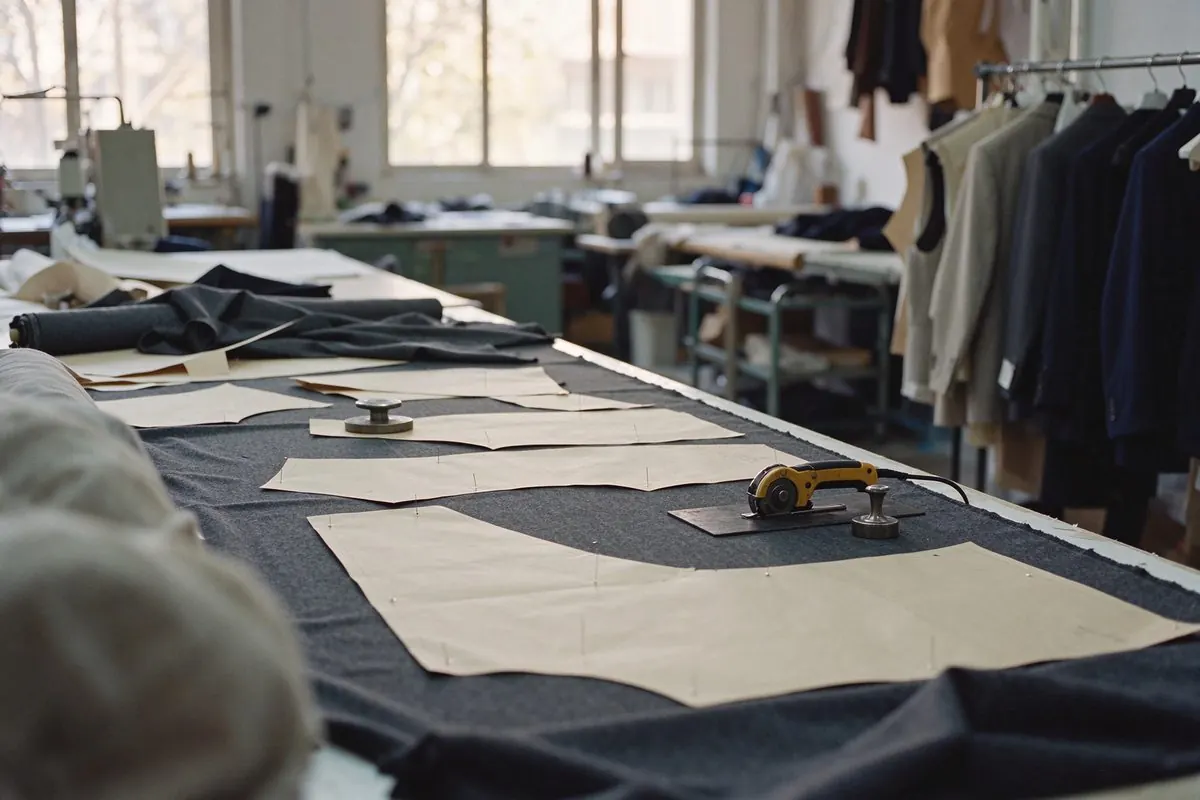
Made-to-measure versus ready-to-wear: where the cost goes
Four cost lines decide whether made-to-measure works at 100 units: pattern and cutting, cloth minimums, remakes, and the sell-through assumption.
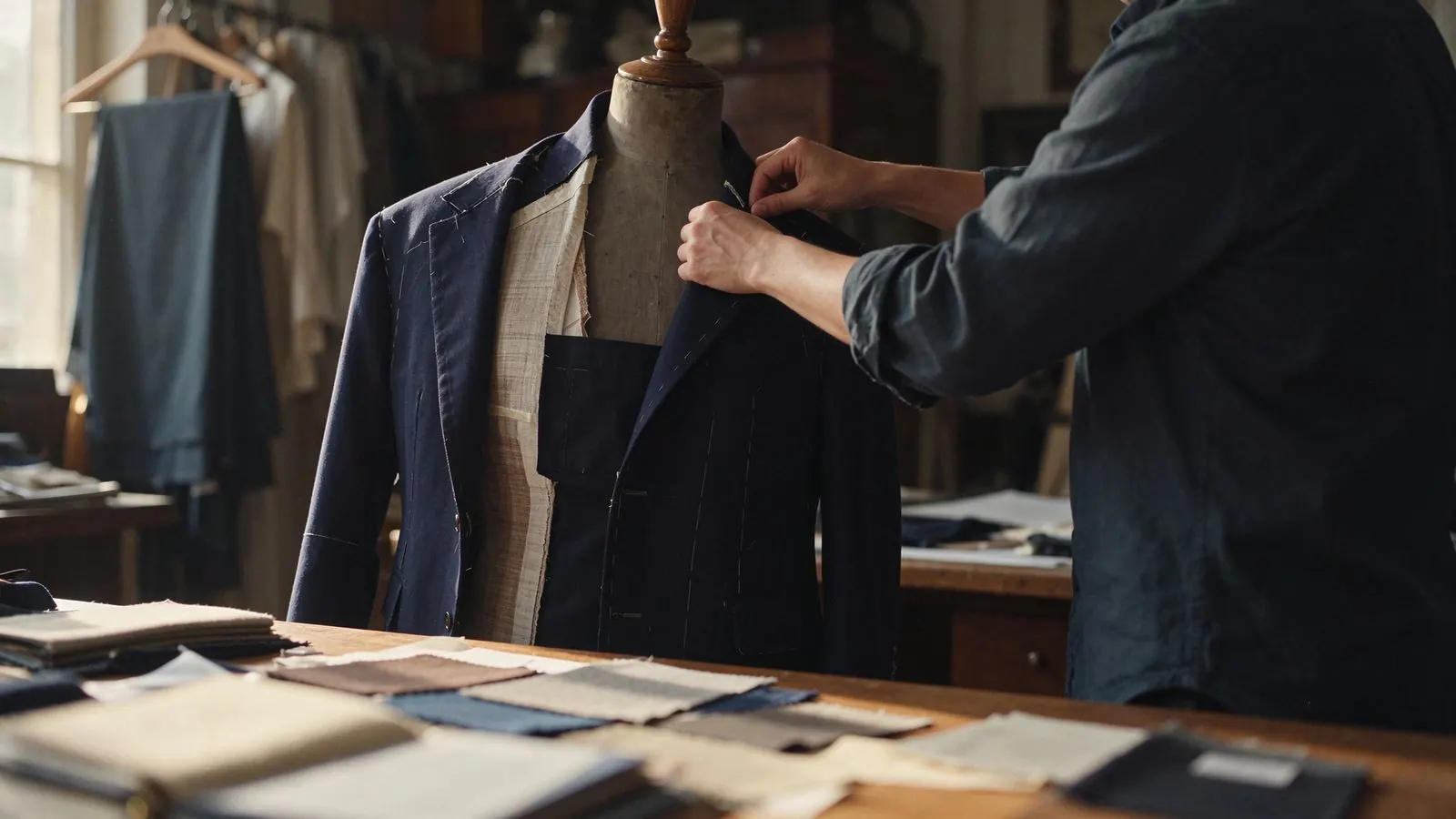
Half-canvas suits, blazers, trousers and shirting made in Humen, Dongguan — for wholesalers, private labels and tailor shops that need a factory which answers in one working day and ships when it said it would.
Most menswear factories quote fast and deliver late. We would rather quote a date we can hold — then hold it.
RUISHI TAILORING is a menswear factory on Renmin Road, Humen, cutting and sewing tailored jackets since 2012. 180 people, 100,000 garments a month, and almost entirely other people's labels: your patterns, your fit, your labels, your cartons.
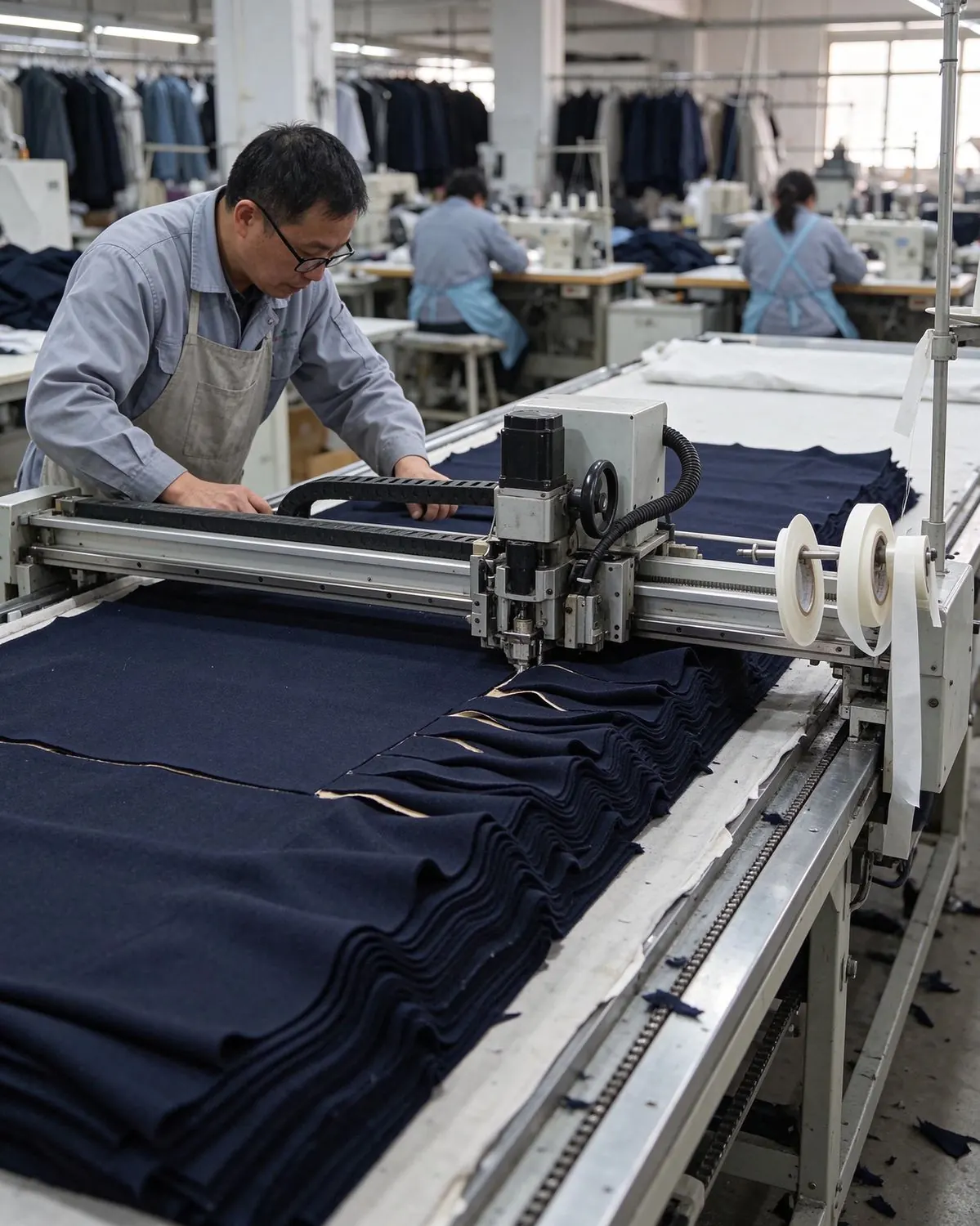
A single jacket passes through eleven stations, and the only station that decides whether a buyer reorders is the one where the shoulder is pressed. We keep that station slow on purpose. The rest of the line is organised around it.
From 100 pieces per style under your own label, sampling in 7 days, bulk in 25–35 days, with fabric and trim decisions locked before we cut.
We do not keep a house book of fabrics and ask you to choose from it. We quote the cloth your price allows, name the mill and the composition on the quote, and hold the same dye lot for reorders.
240–320 g/m² worsted from Italian and English mills for the top of the range; Chinese and Korean worsted at 260–300 g/m² where the landed cost has to stay under a target.
Unstructured jackets and trousers for resorts and cruise ranges, where drape matters less than weight and the garment has to survive a suitcase.
For corporate uniform programmes and travel ranges: mechanical stretch, wrinkle recovery, and a shade range that can be repeated across three production years.
Five stages, each with a named owner on our side and a date you can plan a container around.
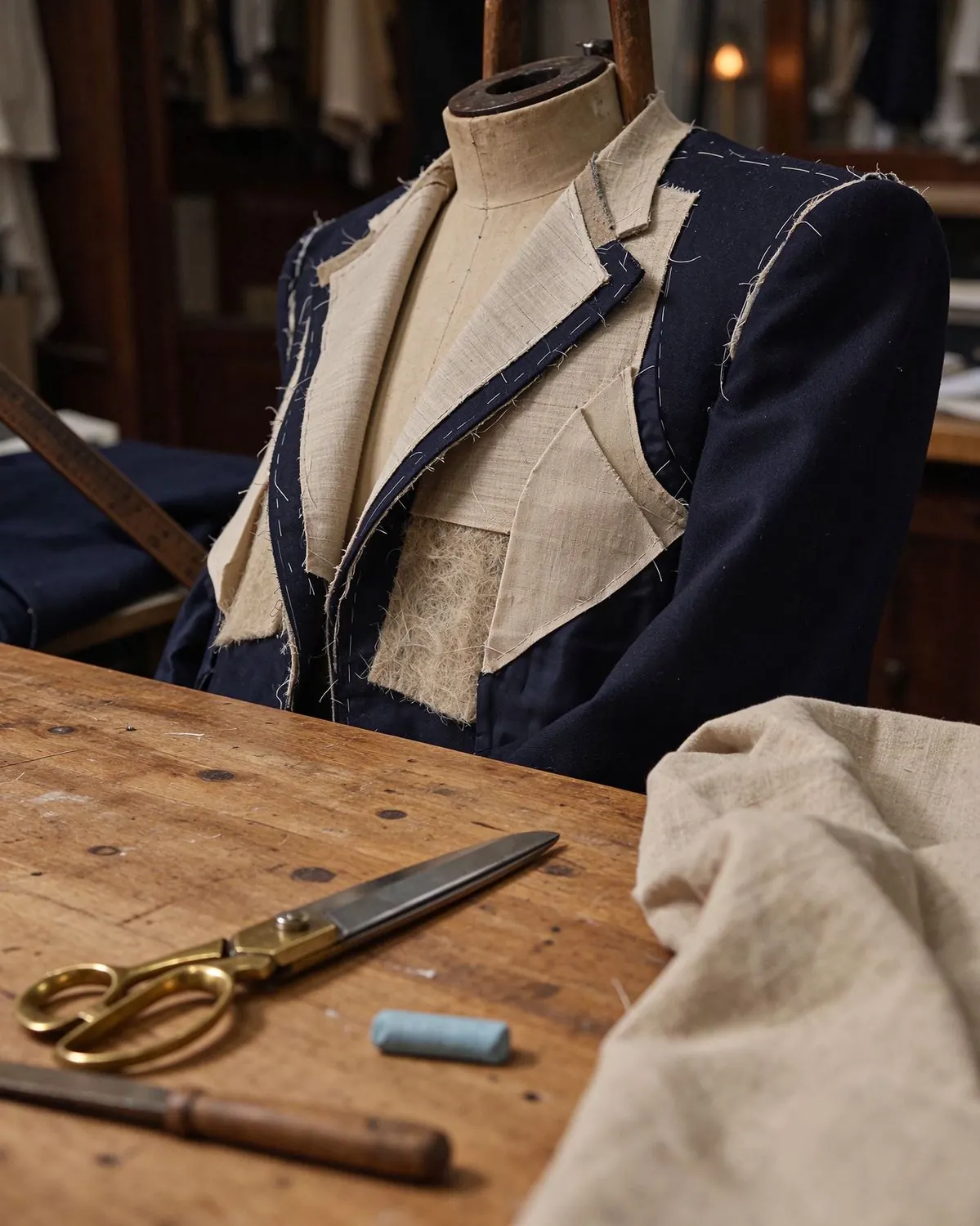
Canvas, fusing, stitch density and measurement tolerance are where cheap suits fail after two washes. We build to the standard your customer will notice in month six, not the one that looks right on the sample hanger.
Fabric is sourced against your target cost and hand-feel: Italian and English mills where the price allows, Chinese and Korean mills where it does not, with the mill and composition named on the quote.
Canvas, cloth and the cutting table. Photographs from the Renmin Road floor — the same standard we quote against.
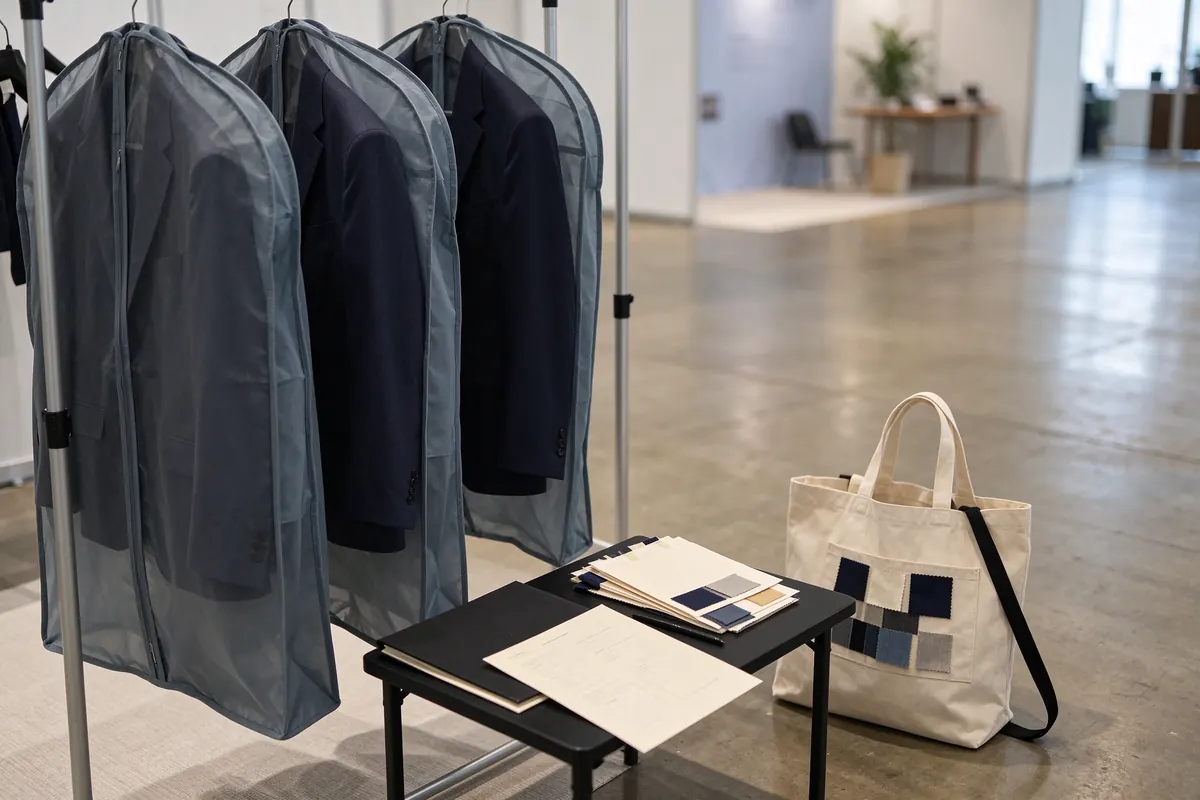
29 November 2026
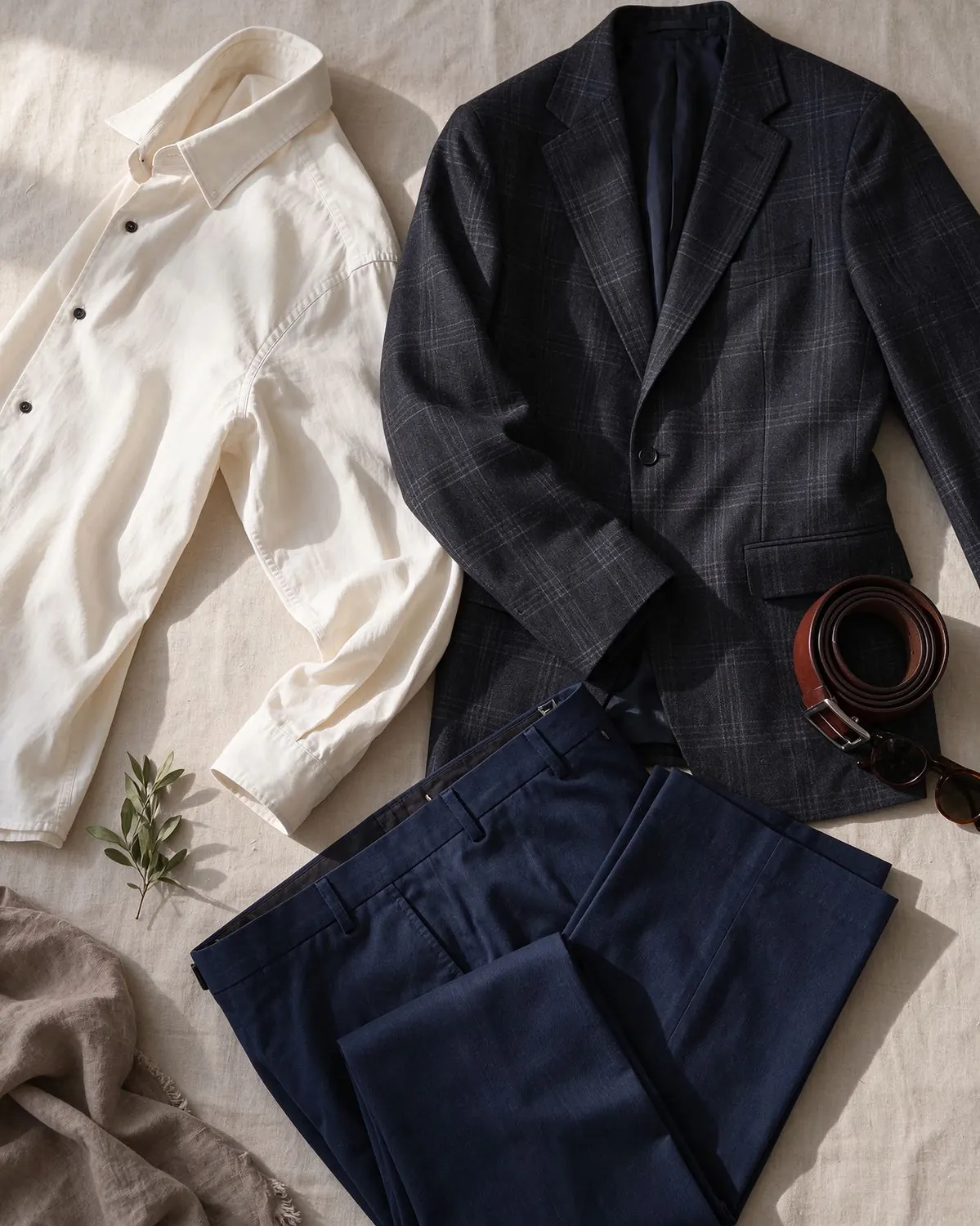
Four cost lines decide whether made-to-measure works at 100 units: pattern and cutting, cloth minimums, remakes, and the sell-through assumption.
29 November 2026
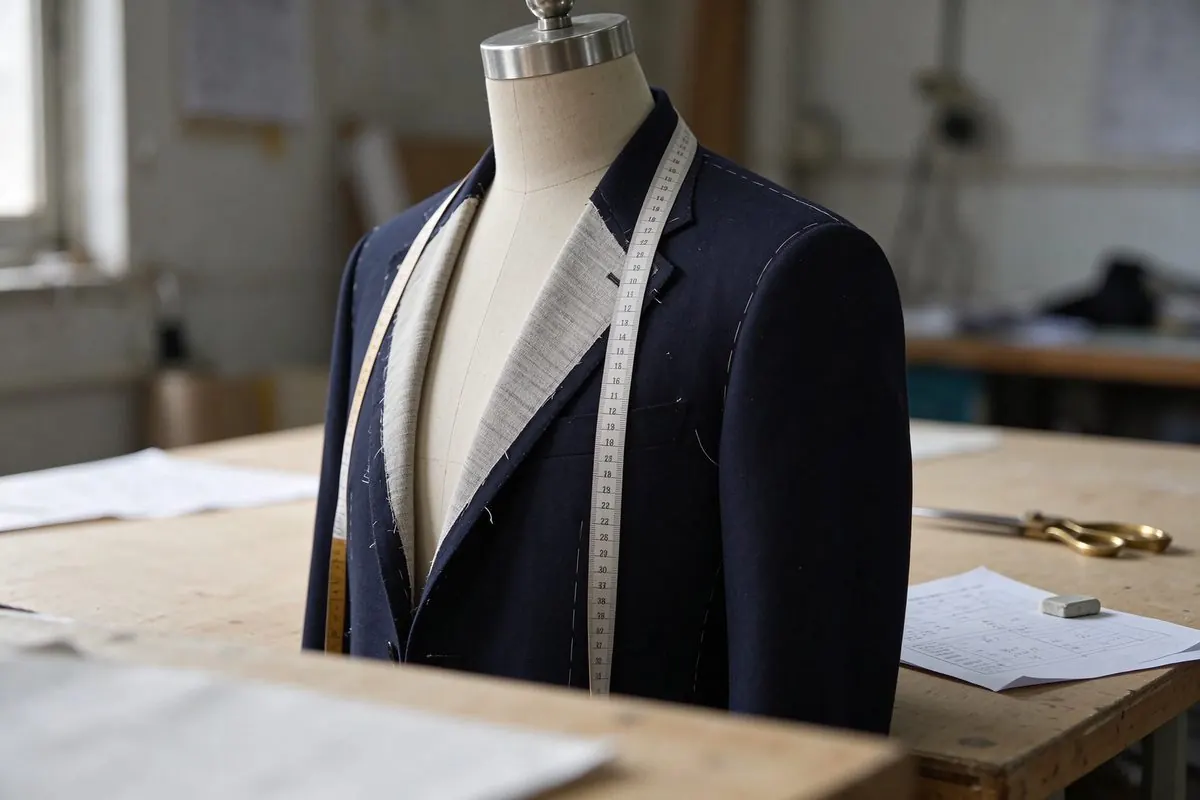
A tech pack is the only document the factory reads when your team is not in the building. The five pages a…
29 November 2026
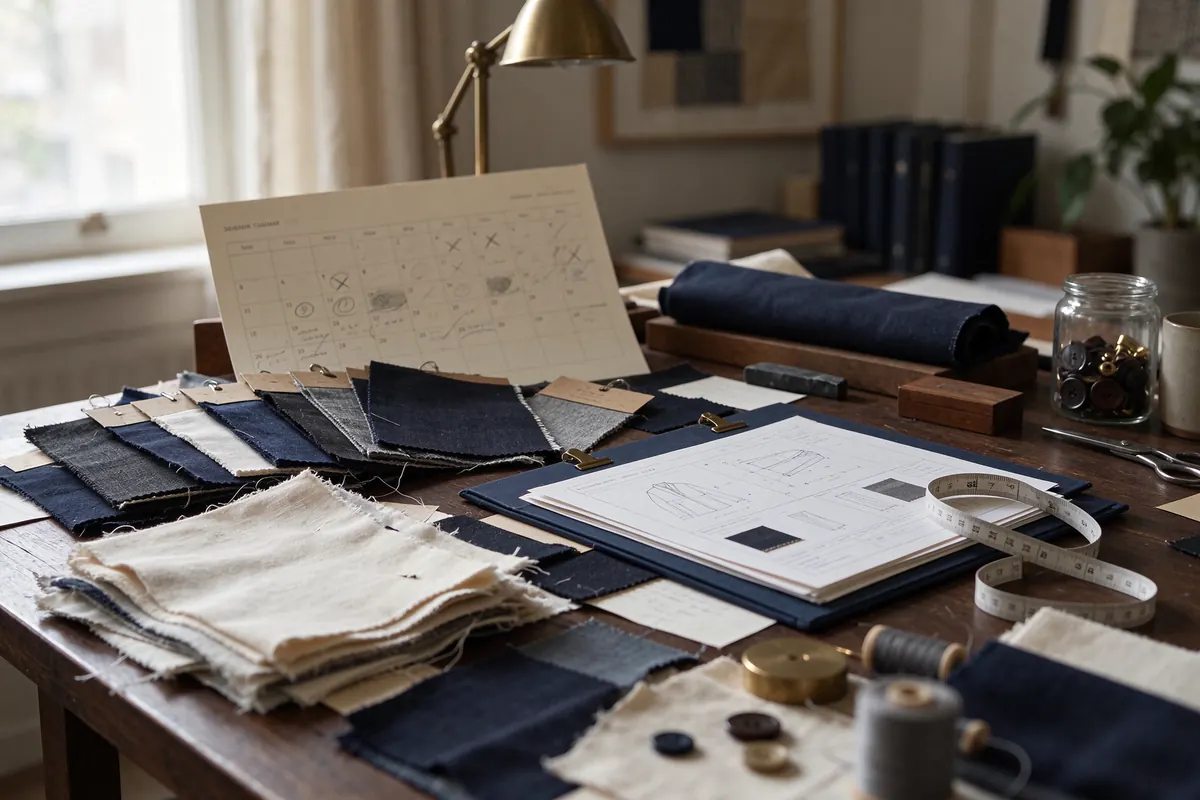
Eight weeks from brief to vessel: the week-by-week plan, the Chinese New Year cut-off and the Ramadan window that decides your ship…
Photos and a size chart are enough to start. We will tell you what we can hold and what we cannot.