In this note
Trade show meetings fail for a simple reason: the buyer arrives with a mood board and the factory cannot quote anything from it. A small kit turns a fifteen-minute conversation into a real number.
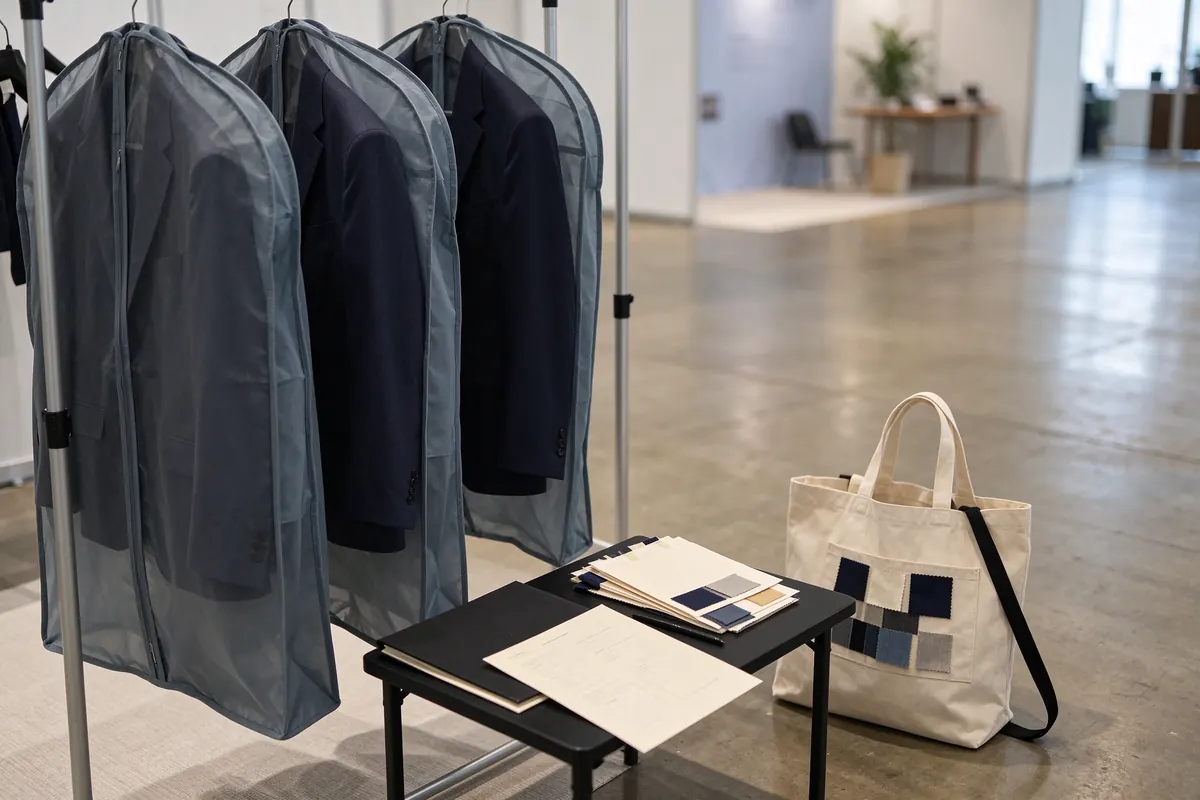
The kit
- One or two reference garments — the jacket that fits your customer, not a stock sample you liked.
- A one-page spec: fabric, weight, construction, size range, quantity per colour.
- A size chart with grading rules, on paper.
- Fabric swatches or the mill reference, plus the target FOB.
- A card with your brand, market, and the season you are buying for.
The five questions
Ask who owns the pattern, what the smallest colourway is, which operations are sub-contracted, what the audit scope covers (and the grade), and what breaks first in their schedule. Answers to those five separate a factory from a trading office faster than any brochure.
What to leave behind
Leave the spec page, not the garment. A reference jacket is your only physical standard; if it stays at the booth it becomes someone else’s sample. Photograph the garment next to the factory’s sample on the rail, and write the booth number and the merchandiser’s name on the spec sheet — the follow-up email is much stronger with both.
The follow-up that works
Send one email within two days: the spec page, the photos, and one question — “can you hold the production date if we approve the sample by this date?” A factory that answers that with a date rather than a range is the one to sample with.
What not to do
Do not collect twenty catalogues. Three serious conversations with a kit in hand beat twenty booths and a bag of brochures, and the costed quotes you get back will be usable rather than indicative.
Questions buyers ask
- What gets a real quote at a booth?
- A reference garment, a one-page spec, a size chart and a target FOB.
- What should I ask before leaving?
- Who owns the pattern, the smallest colourway, which operations are sub-contracted, and the audit scope.
Send a tech pack, a reference garment or just a photo and a size chart — we quote within one working day. How an order runs, from brief to shipment →