In this note
- 1. Chest, measured over a shirt
- 2. Shoulder, seam to seam
- 3. Sleeve length, from the shoulder seam Give sleeve length from the shoulder seam to the cuff, not from centre back. Add the cuff allowance you want — 1.5 cm of shirt cuff showing is the usual brief in the UK and US, less in Southern Europe. 4. Back length
- 5. Trouser waist and rise
- Tolerances worth writing down
- Questions buyers ask
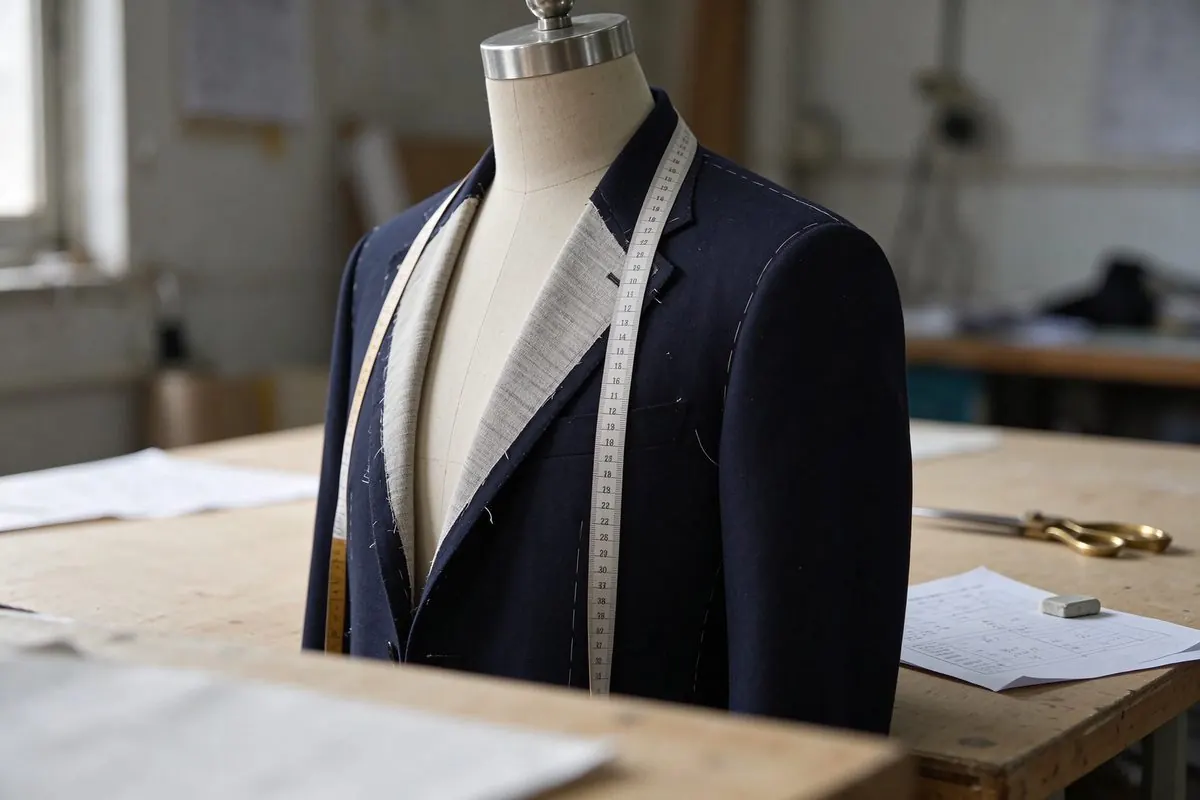
Most fit problems on a first menswear order are not the factory’s fault. They come from a size chart that lists a chest measurement and nothing else, so the pattern is built to a guess. Five numbers, written down properly, remove most of that risk.
1. Chest, measured over a shirt
Half-chest is the number a pattern is actually drafted from. State it as a body measurement, not a garment measurement, and say what the wearer has on underneath. A 2 cm difference here moves the whole armhole and lapel position.
2. Shoulder, seam to seam
Measure across the back from shoulder point to shoulder point on a jacket that already fits your customer. This is the number buyers most often leave out, and it is the one that cannot be corrected later without recutting the shoulder.
3. Sleeve length, from the shoulder seam
Give sleeve length from the shoulder seam to the cuff, not from centre back. Add the cuff allowance you want — 1.5 cm of shirt cuff showing is the usual brief in the UK and US, less in Southern Europe.
4. Back length
From the base of the collar to the hem. This decides whether the jacket reads as a modern short or a classic cover. A 2 cm change is visible on the body; 4 cm changes the style entirely.
5. Trouser waist and rise
Give the finished waist, the rise (crotch to waistband) and the leg opening. If the suit is sold as a two-piece, the trouser block should be graded separately — a jacket size 50 does not imply one trouser waist.
Tolerances worth writing down
- ±1 cm on body measurements, ±0.5 cm on finished garment measurements.
- Shoulder and back length: ±0.5 cm, no plus tolerance on the shoulder.
- Sleeve length measured on the finished garment, both sleeves, not one.
Send us those five numbers with a fit reference — a jacket your customer already buys — and the first sample lands close. Without them, sampling becomes a guessing round, and each round costs a week.
Questions buyers ask
- Which measurement matters most on a first suit?
- Chest and shoulder. A wrong shoulder cannot be corrected later; the chest can be let out two or three centimetres.
- Can you grade from our existing size chart?
- Yes. Send the chart and a fit sample and we grade from yours, not from a stock block.
Send a tech pack, a reference garment or just a photo and a size chart — we quote within one working day. How an order runs, from brief to shipment →