In this note
- 1. Who owns the pattern after the order?
- 2. Where does the fabric come from, and who chooses it?
- 3. What is checked in-line, and by whom?
- 4. How is capacity committed?
- 5. Are any operations sub-contracted?
- 6. What does the certificate actually cover?
- 7. How is a complaint handled after shipment?
- 8. What is the sampling record?
- 9. What breaks first?
- Questions buyers ask
Most factory audits look at the same things: building, machines, certificates on the wall. Those tell you the factory exists. They do not tell you whether your order will be made the way the sample was approved. These nine questions do.
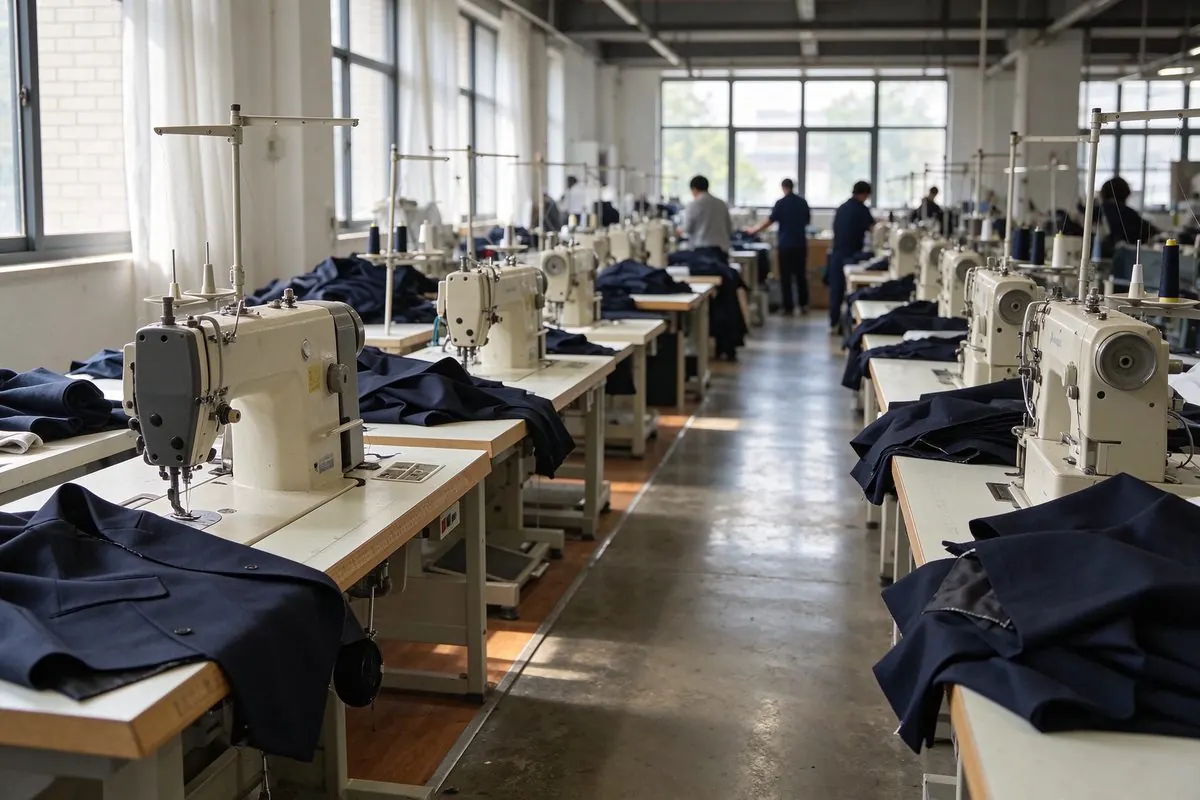
1. Who owns the pattern after the order?
If the answer is the buyer, ask for the block and the graded pattern files at delivery. If it is the factory, ask what happens if you move suppliers next season. Patterns kept for two years mean a repeat order runs without re-approval; patterns kept by the buyer mean you are not locked in.
2. Where does the fabric come from, and who chooses it?
A trading office will name a mill it has never visited. A factory names the mill, the composition and the weight, and tells you what happens if that mill runs out mid-order. Ask for the last three fabric lots used on a similar style.
3. What is checked in-line, and by whom?
Final inspection catches what is already made. In-line checks catch a drift before it becomes 300 jackets. Ask at which stations the measurement check happens, how often, and who signs it.
4. How is capacity committed?
Monthly output is a marketing number. The useful number is how many lines can be dedicated to your style in the week you need them, and what else is running at the same time.
5. Are any operations sub-contracted?
Embroidery, buttonholes, washing and pleating are often sent out. That is normal, but it should be declared, because it adds a hand-off where quality and schedule can slip.
6. What does the certificate actually cover?
ISO 9001 covers a quality management system, not a product. BSCI covers social compliance with a grade and a date. Ask for the audit report scope and the expiry, not just the logo.
7. How is a complaint handled after shipment?
Replacement, credit or repair — and against what evidence. A factory that answers this with a process rather than a promise is usually the one that has done it before.
8. What is the sampling record?
3,000 styles sampled is a claim; ask how many were sampled last year and how many went into bulk. The ratio tells you whether sampling is a service or a sales step.
9. What breaks first?
Every factory has a weak point: fabric lead times, a single pressing line, a trim supplier. A manager who can name it is a manager who plans around it.
None of these require a flight. Six of them can be answered by email in a day, and the answers are more useful than a photo of a reception area.
Questions buyers ask
- What does a BSCI grade C actually mean?
- It passes the minimum social compliance threshold with findings still to close, not a clean bill of health.
- Can we audit before placing an order?
- Yes. Book two weeks ahead and we open the floor, the records and the sub-contract list.
Send a tech pack, a reference garment or just a photo and a size chart — we quote within one working day. How an order runs, from brief to shipment →