In this note
Two jackets can look identical on a hanger and behave completely differently after a season of wear. The difference is what sits between the cloth and the lining, and it is the single question most buyers forget to ask.
Fused
A fusible interlining is bonded to the front panel with heat and pressure. Fast, consistent, and the cheapest way to give a jacket a clean chest. The risk is delamination: after repeated dry cleaning, the bond can soften and the chest starts to look flat and slightly rippled.
Half-canvas
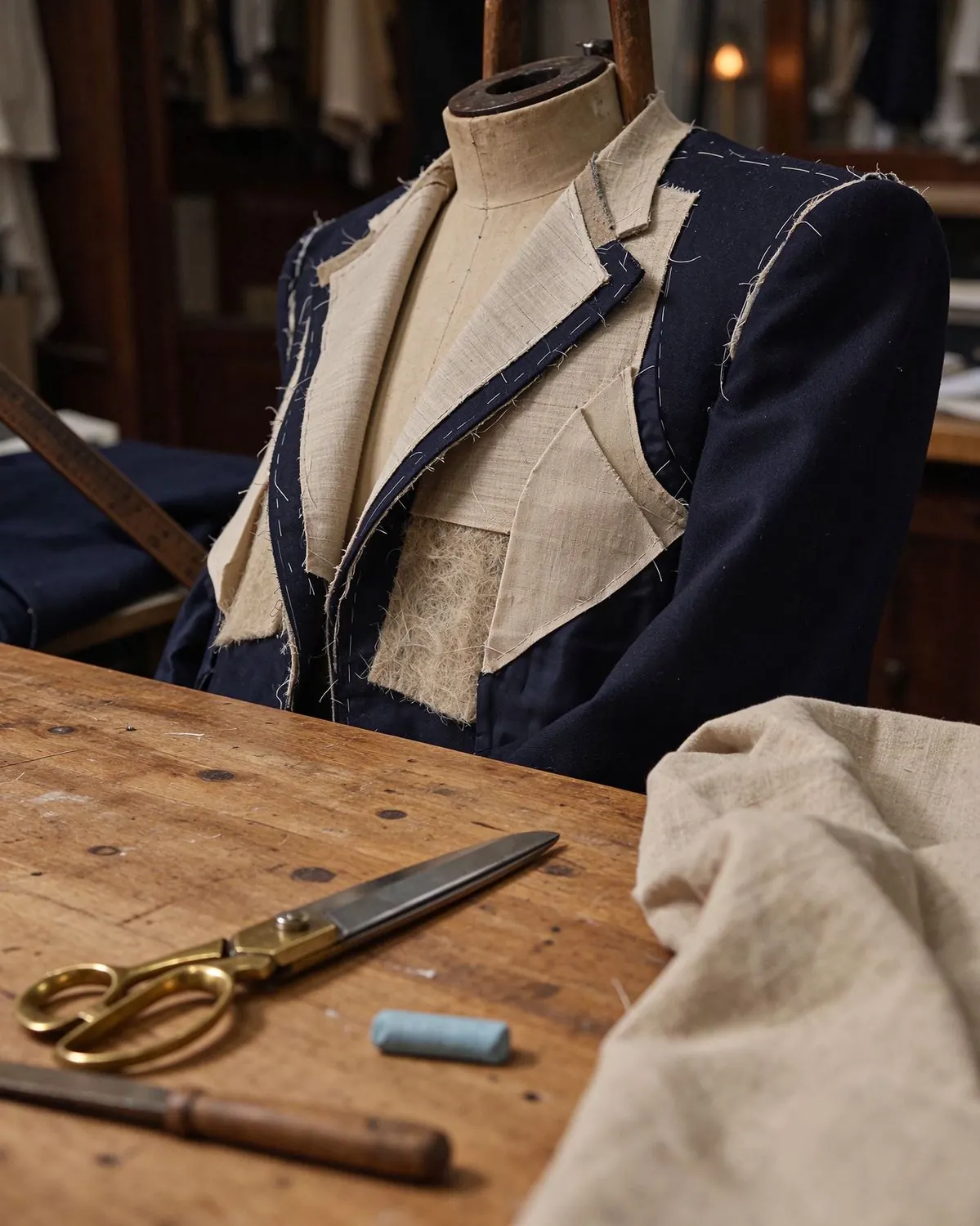
A wool canvas and horsehair chest piece is stitched in by hand, covering the chest and lapel, with fusing below. It holds shape through wear, rolls the lapel properly, and is what most tailored brands mean when they say “constructed”. The cost is labour: roughly USD 8–14 per jacket at our volumes.
What to check on a sample
- Lapel roll. Pinch the lapel between thumb and finger. Canvas rolls softly; fused feels papery and flat.
- Chest canvas. Unpick two stitches inside the lining at the chest. You should see a separate layer, not a glued panel.
- Pick stitching. Hand-finishing shows as small irregular stitches along the lapel edge.
- Shoulder. Press the shoulder pad: it should return, not crease permanently.
When fused is the right answer
For uniform programmes, promo blazers and price-led private label, fusing is honest and appropriate — the garment is not expected to last a decade. Pay for half-canvas where the selling story is tailoring, and say so on the quote so nobody compares two different products at the same price.
Questions buyers ask
- How do I check for canvas through the lining?
- Pinch the chest. Canvas moves separately from the cloth; a fused front feels like one stiff sheet.
- Does half-canvas change the price much?
- Roughly 8 to 12 percent on a jacket at 200 pieces, mostly labour and interlining.
Send a tech pack, a reference garment or just a photo and a size chart — we quote within one working day. How an order runs, from brief to shipment →